
Adobe Clean Install Error Toolkit V4 -thethingy- 〈2025〉

Adobe Clean Install Error Toolkit V4 -thethingy- 〈2025〉

ADOBE CLEAN INSTALL ERROR TOOLKIT v4 -thethingy-

Adobe Clean Install Error Toolkit V4 -thethingy- 〈2025〉

The label reads like a mad scientist’s lab instrument: ADOBE CLEAN INSTALL ERROR TOOLKIT v4 — thethingy. It conjures a device built from equal parts necessity and frustration, assembled in the dim hours when software refuses to behave and livelihoods wait on a successful install. This essay treats that cryptic phrase as a prism through which to examine a modern human ritual: the attempt to wrest order from the tangled guts of commercial software, and the quiet, stubborn artistry of people who make installations work. The ritual of cleaning Installing software is supposed to be banal: accept the terms, click next, wait. Yet commercial software, particularly large creative suites, often becomes an archaeological site. Fragments of past installs — stray files, registry keys, driver traces, licensing artifacts — remain like relics, each one a possible saboteur. Enter the “clean install” ritual: a sequence of deletions, resets, and reboots meant to restore the system to the blank slate the installer expects. It is both practical and ceremonial. The toolkit implied by v4 suggests multiple iterations, refinements born from repeated failure and incremental learning. “thethingy” whispers the humility of a tool whose inventor cannot quite remember the formal name because what matters is not nomenclature but efficacy. Error as narrative Errors are not merely failures; they are stories. A cryptic dialog box, an endless spinner, a license server timeout — each error invites diagnosis. The toolkit frames those narratives into patterns. Error codes become dialect, logs a confessional text. To the initiated, a frozen installer is not a problem but a voice telling you where it hurts. The toolkit translates that voice, offering not only scripts and commands but a taxonomy of failure: permission misalignments, orphaned services, corrupted caches, and mismatched version footprints. Version 4 implies evolution: previous versions taught painful lessons and codified fixes into clearer steps. Thethingy is both manual and mnemonic, a repository of hard-won rules. People behind the fix There is a rare skill in this work. System administrators, support engineers, and power users cultivate patience, pattern recognition, and the capacity to imagine unseen relationships inside software. They read logs the way clinicians read symptoms. Their tools are not only technical — command-line utilities, cleanup scripts, registry export/import routines — but social: forums, archived support threads, and the oral tradition of “I once fixed this by…”. The toolkit embodies that hybrid knowledge: technical precision married to the heuristics formed when deadlines loom and creativity cannot be delayed by a crashed installer. The politics of software cleanup A clean install toolkit also sits at a political crossroads. It reveals the tension between developer intent and user autonomy. Software vendors aim for seamless experiences, but complexity and legacy support produce brittle ecosystems. Users respond by gardening those ecosystems: pruning, grafting, and occasionally forcing a full reset. Tools like thethingy invert the relationship; they are grassroots infrastructure that compensate for commercial brittleness. They can also run afoul of licensing checks, telemetry systems, and anti-tampering measures — a reminder that every technical fix sits inside legal and ethical frameworks. Version numbers signal not just technical maturity but an ongoing negotiation with the software’s evolving defenses. Craftsmanship in troubleshooting Beyond function, the toolkit is a testament to craft. There is elegance in a script that safely removes only what is necessary, in a diagnostic routine that isolates causation without collateral damage, in documentation that turns jargon into a confident sequence of steps. Users who wield such tools perform a subtle kind of restoration work: they restore the conditions for creative labor, enabling designers, photographers, video editors, and illustrators to return to the business of making. In that sense, ADOBE CLEAN INSTALL ERROR TOOLKIT v4 — thethingy — is less a toolbox and more an enabler of culture. Conclusion: the human layer beneath software At first glance the phrase is amusingly informal; at close range it is emblematic. It compresses technical specificity and wry informality into one label. It speaks of many reboots, late-night forums, and people who refuse to let bureaucracy stand between an idea and its expression. Toolkits like this remind us that software does not exist in a vacuum: it is embedded in people’s workflows, histories, and improvisations. By naming and refining the practices of cleanup and repair, they make the intangible architecture of digital creativity legible and livable.

In the end, thethingy is more than a set of commands. It is a small manifesto: that systems can be mended, that errors can be read as guides, and that patience and craft remain indispensable in a world ever-more mediated by complex machines. ADOBE CLEAN INSTALL ERROR TOOLKIT v4 -thethingy-
The label reads like a mad scientist’s lab instrument: ADOBE CLEAN INSTALL ERROR TOOLKIT v4 — thethingy. It conjures a device built from equal parts necessity and frustration, assembled in the dim hours when software refuses to behave and livelihoods wait on a successful install. This essay treats that cryptic phrase as a prism through which to examine a modern human ritual: the attempt to wrest order from the tangled guts of commercial software, and the quiet, stubborn artistry of people who make installations work. The ritual of cleaning Installing software is supposed to be banal: accept the terms, click next, wait. Yet commercial software, particularly large creative suites, often becomes an archaeological site. Fragments of past installs — stray files, registry keys, driver traces, licensing artifacts — remain like relics, each one a possible saboteur. Enter the “clean install” ritual: a sequence of deletions, resets, and reboots meant to restore the system to the blank slate the installer expects. It is both practical and ceremonial. The toolkit implied by v4 suggests multiple iterations, refinements born from repeated failure and incremental learning. “thethingy” whispers the humility of a tool whose inventor cannot quite remember the formal name because what matters is not nomenclature but efficacy. Error as narrative Errors are not merely failures; they are stories. A cryptic dialog box, an endless spinner, a license server timeout — each error invites diagnosis. The toolkit frames those narratives into patterns. Error codes become dialect, logs a confessional text. To the initiated, a frozen installer is not a problem but a voice telling you where it hurts. The toolkit translates that voice, offering not only scripts and commands but a taxonomy of failure: permission misalignments, orphaned services, corrupted caches, and mismatched version footprints. Version 4 implies evolution: previous versions taught painful lessons and codified fixes into clearer steps. Thethingy is both manual and mnemonic, a repository of hard-won rules. People behind the fix There is a rare skill in this work. System administrators, support engineers, and power users cultivate patience, pattern recognition, and the capacity to imagine unseen relationships inside software. They read logs the way clinicians read symptoms. Their tools are not only technical — command-line utilities, cleanup scripts, registry export/import routines — but social: forums, archived support threads, and the oral tradition of “I once fixed this by…”. The toolkit embodies that hybrid knowledge: technical precision married to the heuristics formed when deadlines loom and creativity cannot be delayed by a crashed installer. The politics of software cleanup A clean install toolkit also sits at a political crossroads. It reveals the tension between developer intent and user autonomy. Software vendors aim for seamless experiences, but complexity and legacy support produce brittle ecosystems. Users respond by gardening those ecosystems: pruning, grafting, and occasionally forcing a full reset. Tools like thethingy invert the relationship; they are grassroots infrastructure that compensate for commercial brittleness. They can also run afoul of licensing checks, telemetry systems, and anti-tampering measures — a reminder that every technical fix sits inside legal and ethical frameworks. Version numbers signal not just technical maturity but an ongoing negotiation with the software’s evolving defenses. Craftsmanship in troubleshooting Beyond function, the toolkit is a testament to craft. There is elegance in a script that safely removes only what is necessary, in a diagnostic routine that isolates causation without collateral damage, in documentation that turns jargon into a confident sequence of steps. Users who wield such tools perform a subtle kind of restoration work: they restore the conditions for creative labor, enabling designers, photographers, video editors, and illustrators to return to the business of making. In that sense, ADOBE CLEAN INSTALL ERROR TOOLKIT v4 — thethingy — is less a toolbox and more an enabler of culture. Conclusion: the human layer beneath software At first glance the phrase is amusingly informal; at close range it is emblematic. It compresses technical specificity and wry informality into one label. It speaks of many reboots, late-night forums, and people who refuse to let bureaucracy stand between an idea and its expression. Toolkits like this remind us that software does not exist in a vacuum: it is embedded in people’s workflows, histories, and improvisations. By naming and refining the practices of cleanup and repair, they make the intangible architecture of digital creativity legible and livable.

In the end, thethingy is more than a set of commands. It is a small manifesto: that systems can be mended, that errors can be read as guides, and that patience and craft remain indispensable in a world ever-more mediated by complex machines.

Powerful tools for the system trader

ADOBE CLEAN INSTALL ERROR TOOLKIT v4 -thethingy-
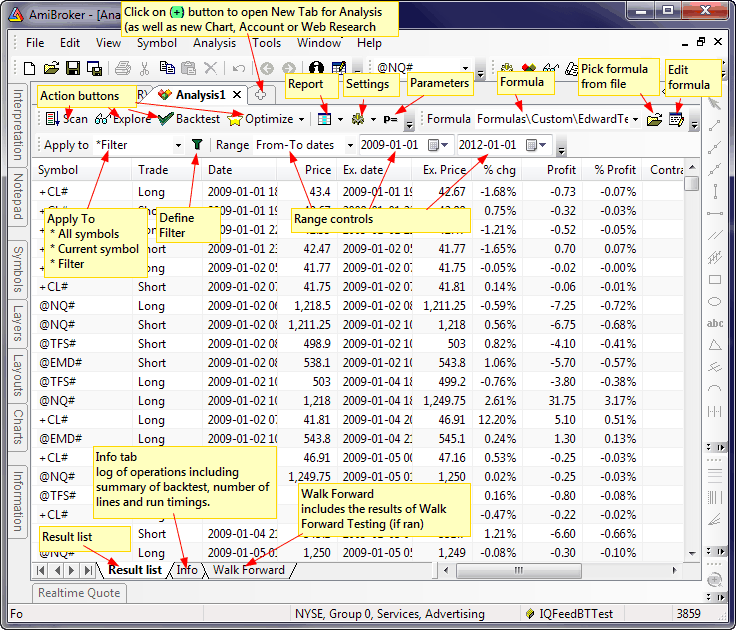
The Analysis window

The Analysis window is home to all your scans, explorations, portfolio backtests, optimizations, walk-forward tests and Monte Carlo simulation

Screen markets for opportunities

Exploration is multi-purpose screening/data mining tool that produces fully programmable tabular output with unlimited number of rows and columns from all symbols data

Test your system

The Backtest allows to test your system performance on historical data. The simulation is performed on portfolio-level as in real-life, with multiple securities traded at the same time, each having user-definable position sizing rule.

Scoring & ranking

If multiple entry signals occur on the same bar and you run out of buying power, AmiBroker performs bar-by-bar ranking based on user-definable position score to find preferable trade.

Find optimum parameter values

Tell AmiBroker to try thousands of different parameter combinations to find best-performing ones. Use Smart Artificial Intelligence Optimization (Particle Swarm and CMA-ES) to search huge spaces in limited time.

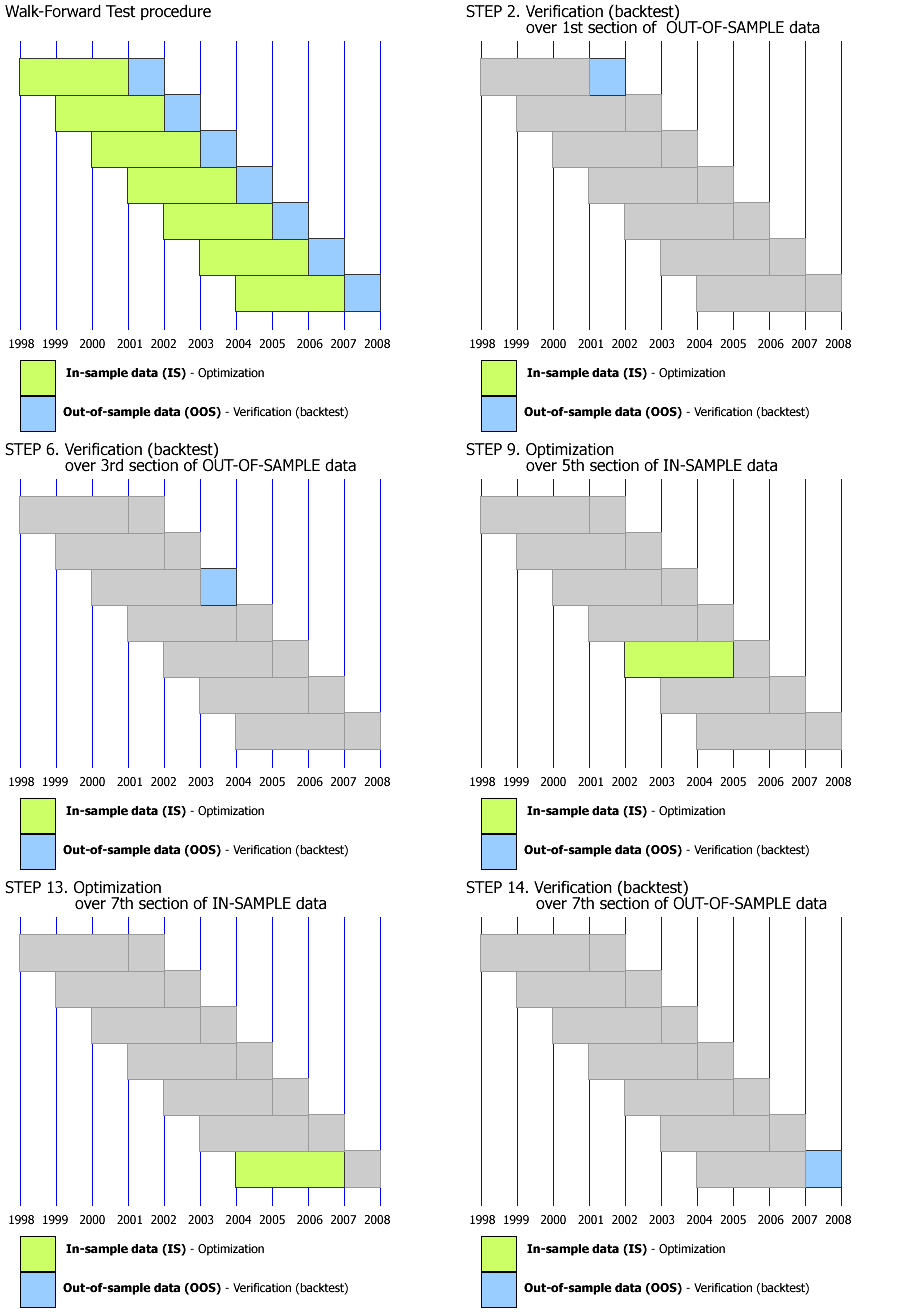
Walk-forward testing

Don't fall into over-fitting trap. Validate robustness of your system by checking its Out-of-Sample performance after In-Sample optimization process.

ADOBE CLEAN INSTALL ERROR TOOLKIT v4 -thethingy-
ADOBE CLEAN INSTALL ERROR TOOLKIT v4 -thethingy-ADOBE CLEAN INSTALL ERROR TOOLKIT v4 -thethingy-
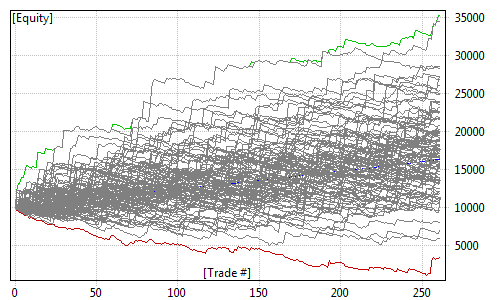
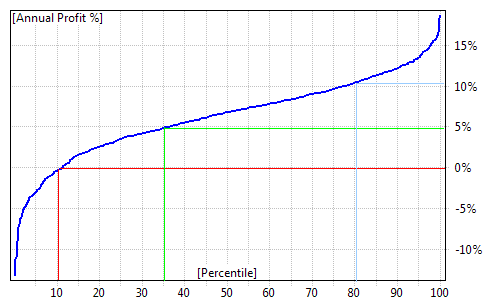
Monte Carlo Simulation

Prepare yourself for difficult market conditions. Check worst-case scenarios and probability of ruin. Take insight into statistical properties of your trading system

Concise and fast formula language to express your trading ideas

ADOBE CLEAN INSTALL ERROR TOOLKIT v4 -thethingy-
Fast array and matrix processing

In AmiBroker Formula Language (AFL) vectors and matrices are native types like plain numbers. To calculate mid point of High and Low arrays element-by-element you just type MidPt = ( H + L )/2; // H and L are arrays and it gets compiled to vectorized machine code. No need to write loops. This makes it possible to run your formulas at the same speed as code written in assembler. Native fast matrix operators and functions make statistical calculations a breeze.

Concise language means less work

Your trading systems and indicators written in AFL will take less typing and less space than in other languages because many typical tasks in AFL are just single-liners. For example dynamic, ATR-based Chandelier's stop is just:ApplyStop( stopTypeTrailing, stopModePoint, 3* ATR(14), True, True );

Built-in debugger

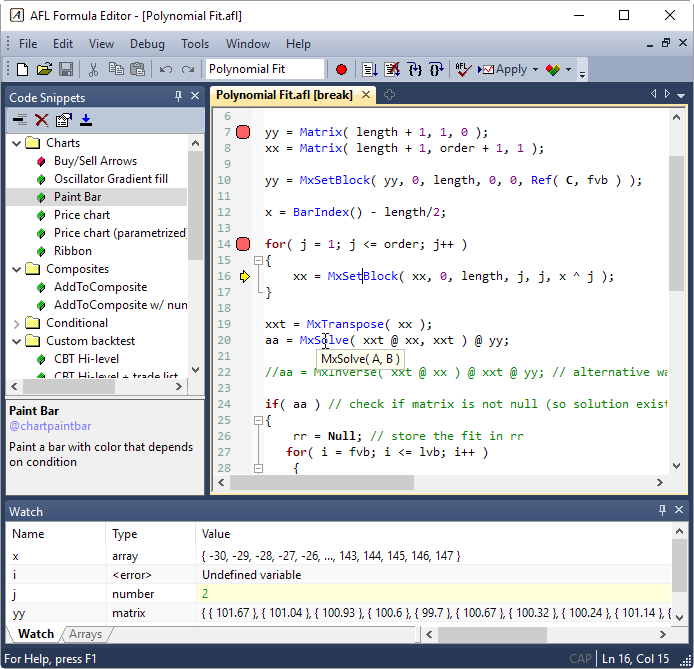
The debugger allows you to single-step thru your code and watch the variables in run-time to better understand what your formula is doing

State-of-the-art code editor

Enjoy advanced editor with syntax highlighting, auto-complete, parameter call tips, code folding, auto-indenting and in-line error reporting. When you encounter an error, meaningful message is displayed right in-line so you don't strain your eyes

Less typing, quicker results

Coding your formula has never been easier with ready-to-use Code snippets. Use dozens of pre-written snippets that implement common coding tasks and patterns, or create your own snippets!

Multi-threading

All your formulas automatically benefit from multiple processors/cores. Each chart formula, graphic renderer and every analysis window runs in separate threads.

Three AmiBroker editions to choose from

299  Buy
Standard Edition
Includes 24 months of free upgrades & support

Entry-level version for End-of-day and swing traders. End-of-day and Real time. Intraday starting from 1-minute interval. 10 symbols limit in Real time Quote window. 2 simultaneous threads per Analysis window. 32-bit only.

379  Buy
Professional Edition
Includes 24 months of free upgrades & support

Professional Real-Time and Analytical platform with advanced backtesting and optimization. End-of-day and Real time. All Intraday Tick/Second/Minute intervals, Unlimited symbols in Real time Quote window. Unlimited symbols in Time&Sales. MAE/MFE stats included. Up to 32 simultaneous threads per Analysis window. Includes both 64-bit and 32-bit versions.

499  Buy
Ultimate Pack Pro
Includes 24 months of free upgrades & support

Everything that AmiBroker Professional Edition has plus two very useful programs:
AmiQuote - quote downloader from multiple on-lines sources featuring free EOD and intraday data and free fundamental data.
AFL Code Wizard - creates AFL formulas out of plain English sentences. Invaluable learning tool for novices. (AmiQuote and AFL Code Wizard licenses are worth $198 when purchased separately so you save 8% when buying this pack)

All our licenses are perpetual which means you can buy once and use the version that you purchased forever. They also come with 24-month free upgrades, support and maintenance which means that you will be able to upgrade to the newest version during that period at no cost. All licensed users are also entitled to receive 50% discount on upgrade purchases past free upgrade period.

System requirements: Microsoft Windows 11, 10, 8.1, 7 (SP1) at least 1GB RAM. Apple Mac users can use Bootcamp / Parallels / VMWare to run AmiBroker.